
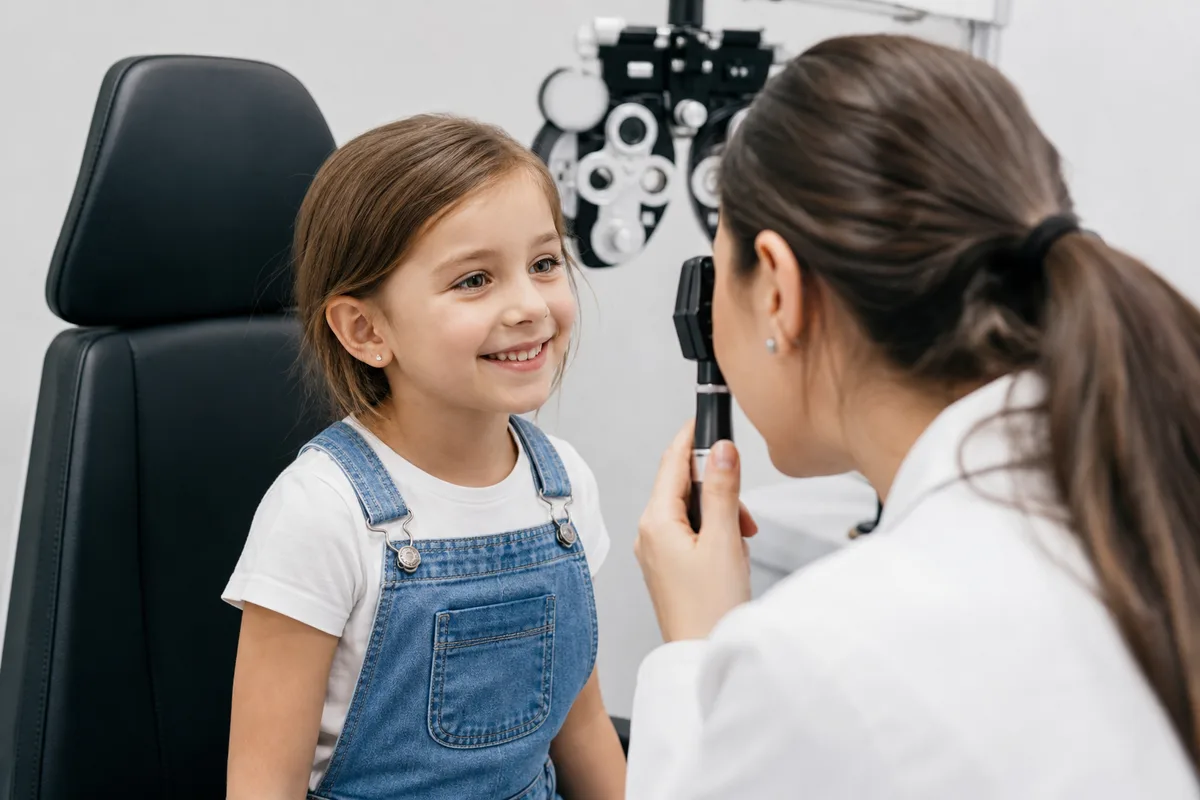
Introduction: Why Early Eye Care Matters for Kids
Children rely on clear vision for nearly everything they do—learning to read, recognizing faces, playing sports, and simply exploring the world around them. Yet many vision problems in children have no obvious symptoms, so a child may not realize their sight isn't normal, and parents and teachers often don't notice either. Regular, comprehensive eye exams are the single best way to catch these issues early, before they can affect a child's learning and development.
What Is a Pediatric Eye Exam?
A pediatric eye exam is a comprehensive evaluation of your child's visual system performed by an optometrist. It goes well beyond the basic vision screenings offered at school or the pediatrician's office, which typically only check distance visual acuity and can miss many common childhood vision conditions.
What a Comprehensive Exam Typically Covers
- History Review: Discussing family eye history, developmental milestones, and any concerns parents or teachers have noticed.
- Visual Acuity Testing: Checking how clearly your child sees at various distances.
- Eye Alignment and Teaming: Making sure both eyes work together properly and track and focus as they should.
- Refractive Assessment: Determining whether your child is nearsighted, farsighted, or has astigmatism.
- Eye Health Evaluation: Examining the internal and external structures of the eye to rule out other concerns.
Why Is Pediatric Eye Care So Important?
Vision and Learning Go Hand in Hand
A large share of what children learn in the classroom is presented visually. When a child struggles to see clearly or comfortably, it can look like an attention problem, a reading difficulty, or reluctance to do schoolwork—when the real issue is an undetected vision problem. Catching and correcting these issues early helps give kids a fair shot at keeping up with their peers.
Some Conditions Are Time-Sensitive
Conditions like amblyopia (lazy eye) respond best to treatment when caught in early childhood, while the visual system is still developing. The earlier these issues are identified, the more treatment options are typically available.
Building Lifelong Eye Health Habits
Starting regular eye exams young helps normalize eye care as part of routine health maintenance, making children more comfortable with checkups throughout their lives.
Common Childhood Vision Issues
Several conditions are frequently identified during pediatric eye exams, including:
- Amblyopia (Lazy Eye): Reduced vision in one eye because the brain favors the other eye, often with no outward signs.
- Strabismus (Eye Misalignment): When the eyes don't point in the same direction, which can affect depth perception.
- Refractive Errors: Nearsightedness, farsightedness, or astigmatism that make images appear blurry.
- Progressive Myopia: Nearsightedness that can worsen through the school years, which is increasingly common and worth monitoring closely.
Recommended Exam Timeline for Children
Eye care organizations generally recommend a schedule like this for children's vision care:
- Infancy: An initial vision check within the first year of life.
- Preschool Age: A comprehensive exam around age 3, when a child can begin to participate in basic vision testing.
- Before Starting School: A full exam around age 5-6 to catch any issues before they can affect learning.
- School Years: Regular exams approximately every one to two years, or as recommended, since children's vision can change quickly as they grow.
Your optometrist can help tailor a schedule to your child's individual needs and any risk factors.
Signs Parents Should Watch For
Because kids often don't know what "normal" vision looks like, they rarely complain about seeing poorly. Instead, watch for behavioral clues such as:
- Frequent squinting or closing one eye
- Sitting very close to the TV or holding books and devices close to the face
- Tilting or turning the head to look at things
- Rubbing the eyes often, or complaints of headaches or eye strain
- Losing their place while reading or using a finger to track words
- Avoiding reading or other close-up activities
- Struggling academically or having trouble concentrating in school
If you notice any of these signs, it's worth scheduling a comprehensive eye exam, even if your child recently passed a school vision screening.
Making Eye Exams Comfortable for Kids
We know that a visit to any healthcare provider can feel intimidating for a child. Our team takes a patient, family-friendly approach with every young patient—explaining each step in kid-friendly language, using age-appropriate testing methods, and taking the time needed so children feel at ease. Parents are welcome throughout the exam, and we're happy to answer questions about what we find and what it means for your child.
Conclusion: Give Your Child's Vision the Attention It Deserves
Healthy vision is foundational to how children learn, play, and grow. Regular pediatric eye exams are one of the simplest ways to catch problems early and support your child's development. At Vistasite Eye Care, we're proud to offer compassionate, family-focused eye care to the Washington Heights community, with Dr. Vladimir Dvoretsky and Dr. Sabina Oboukova bringing a preventive, patient-centered approach to every visit.
Ready to Schedule Your Child's Eye Exam?
Call Vistasite Eye Care today at (929) 250-5170 to book a pediatric eye exam.