
Introduction: Why Your Eyes Need Special Attention When You Have Diabetes
When was the last time you had a dilated eye exam? If you have diabetes—or you're a caregiver for someone who does—the answer matters more than you might think. Diabetes can quietly affect the tiny blood vessels in the retina long before you ever notice a change in your vision. Let's walk through how diabetes affects your eyes, why annual screenings are so important, and what to expect when you come in for a diabetic eye exam.
How Diabetes Affects Your Eyes
Elevated blood sugar over time can damage blood vessels throughout the body, and the eyes are no exception. The retina—the light-sensitive tissue at the back of the eye—depends on a delicate network of small blood vessels to function properly. When those vessels are damaged, several conditions can develop.
Diabetic Retinopathy
Diabetic retinopathy occurs when high blood sugar damages the blood vessels in the retina, causing them to swell, leak fluid, or close off entirely. In more advanced stages, the retina may respond by growing new, abnormal blood vessels that are fragile and prone to bleeding. Left untreated, diabetic retinopathy is a leading cause of vision loss in adults.
Diabetic Macular Edema
When fluid leaks into the macula—the part of the retina responsible for sharp, central vision—it can cause swelling known as macular edema. This can blur central vision and make everyday tasks like reading or recognizing faces more difficult.
Increased Risk of Cataracts and Glaucoma
People with diabetes are also more likely to develop cataracts (clouding of the eye's natural lens) at a younger age, and are at higher risk for glaucoma, a condition that damages the optic nerve. Both are additional reasons why comprehensive, dilated eye care is essential for anyone managing diabetes.
Why Annual Dilated Eye Exams Are So Important
Early Stages Often Have No Symptoms
One of the most important things to understand about diabetic eye disease is that it can progress significantly before you notice any change in your vision. By the time symptoms appear, damage to the retina may already be advanced. This is why the American Diabetes Association and eye care professionals recommend a comprehensive dilated eye exam at least once a year for anyone with diabetes—even if your vision seems perfectly fine.
Early Detection Protects Your Vision
Catching changes early gives you and your care team the best chance to slow or halt progression. Many cases of vision loss from diabetic eye disease are preventable when the condition is identified and monitored early.
Coordinated Care With Your Medical Team
Your eyes can act as a window into how well your diabetes is being managed overall. Our doctors work alongside your endocrinologist or primary care physician, sharing findings from your eye exam so your whole care team has a complete picture of your health.
What Happens During a Diabetic Eye Exam
Understanding what to expect can help you feel more comfortable about your visit.
1. Health and Medical History Review
Our doctors will ask about:
- How long you've had diabetes and how it's currently managed
- Recent blood sugar (A1C) levels, if known
- Any changes in your vision, such as blurriness or new floaters
- Other medications and health conditions
2. Visual Acuity and Eye Pressure Testing
We'll measure how clearly you're seeing at various distances and check the pressure inside your eyes, which helps screen for glaucoma.
3. Pupil Dilation
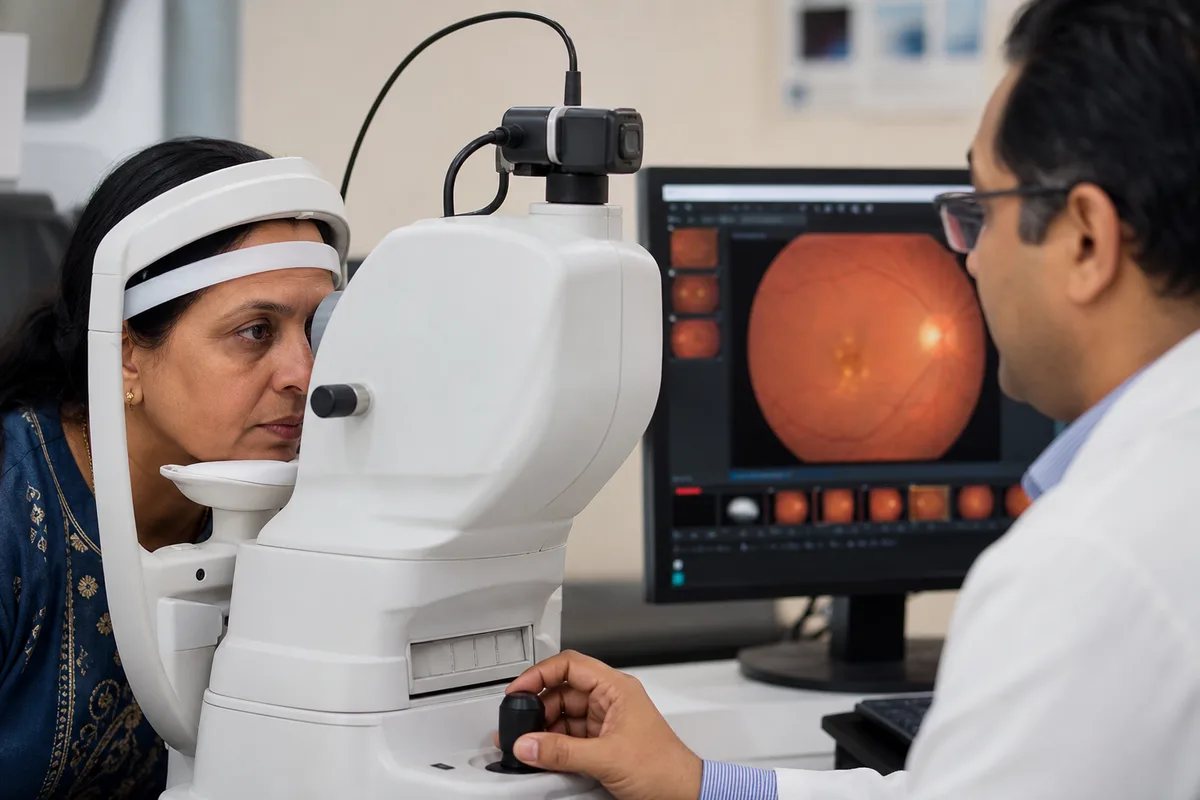
Eye drops are used to widen (dilate) your pupils, allowing our doctors to get a clear, detailed view of the retina and the blood vessels within it. Dilation is the single most important part of a diabetic eye exam—many early changes simply cannot be seen without it.
4. Retinal Examination
With your pupils dilated, we carefully examine the retina for signs of leaking blood vessels, swelling, abnormal new vessel growth, or other changes associated with diabetic retinopathy and macular edema.
5. Discussion and Next Steps
After the exam, we'll walk you through what we found and recommend a plan going forward. This may include:
- Continuing with annual monitoring if no changes are found
- More frequent follow-up exams if early changes are detected
- Coordinating with your endocrinologist or PCP on blood sugar management
- Referral to a retina specialist for advanced treatment, if ever needed
Warning Signs to Watch For Between Exams
While diabetic eye disease often has no early symptoms, contact us promptly if you notice any of the following:
- Blurry or fluctuating vision
- New floaters or dark spots drifting across your field of vision
- Difficulty seeing at night or adjusting to dim lighting
- Dark or empty areas in your vision
- Sudden vision loss in one or both eyes
Any of these can signal that diabetic eye disease has progressed and needs prompt attention.
Managing Blood Sugar Alongside Regular Eye Care
Annual eye exams are essential, but they work best as part of a bigger picture. Keeping your blood sugar, blood pressure, and cholesterol well managed—together with your endocrinologist or primary care physician—significantly lowers your risk of developing diabetic retinopathy in the first place, and slows its progression if it's already present. Think of your eye exam and your diabetes management as partners working toward the same goal: protecting your long-term vision and health.
Conclusion: Make Diabetic Eye Exams a Yearly Habit
A diabetic eye exam is one of the most important preventive steps you can take if you're living with diabetes. At Vistasite Eye Care, Dr. Vladimir Dvoretsky and Dr. Sabina Oboukova provide comprehensive, compassionate dilated eye exams for our Washington Heights community, coordinating closely with your medical team to help protect your vision for years to come. Don't wait for symptoms to appear—schedule your diabetic eye exam today.
Ready to Book Your Appointment?
Call Vistasite Eye Care at (929) 250-5170 to schedule your diabetic eye exam.